

 Facebook
 X
X
 Pinterest
 Copy Link
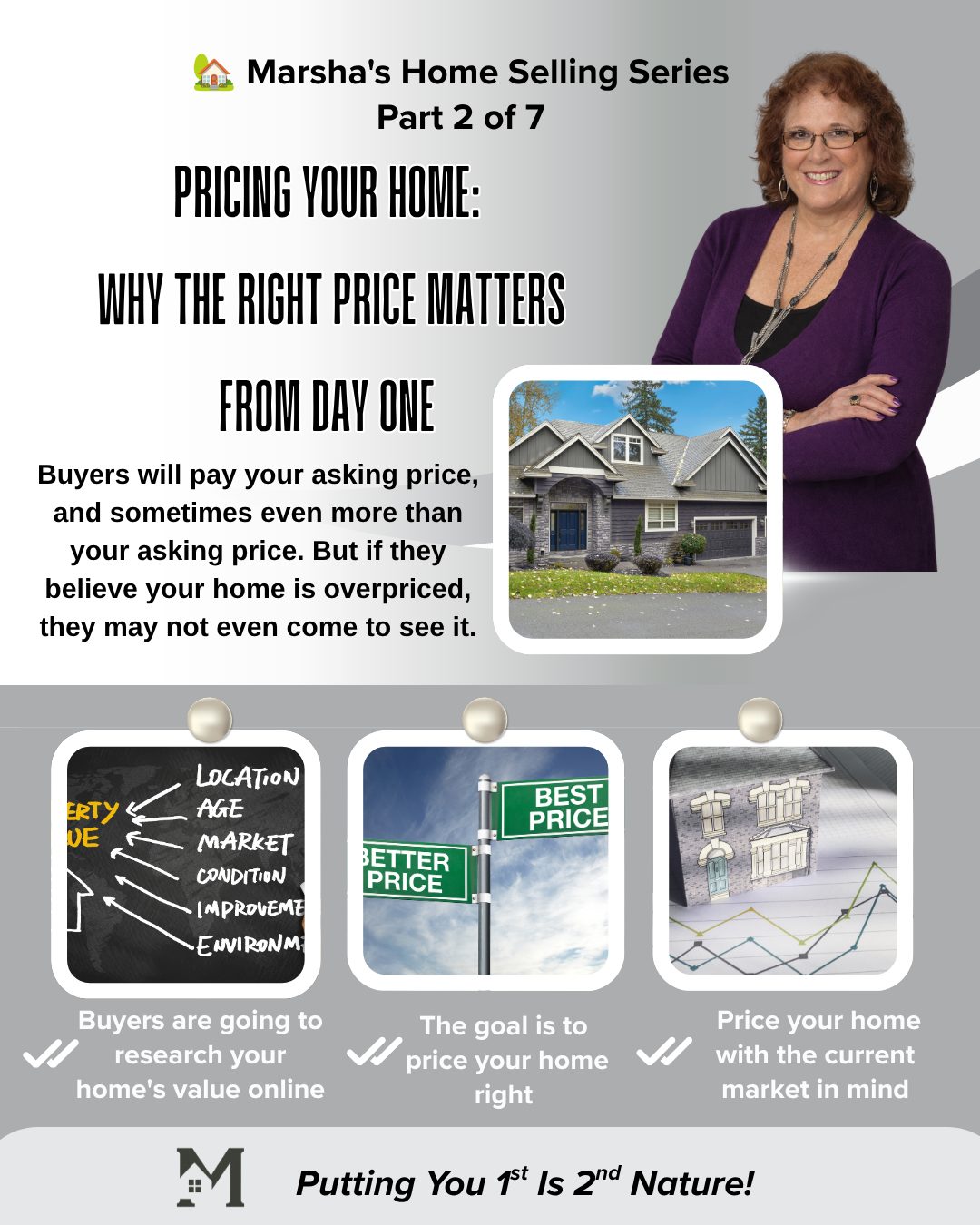
Pricing Your Home: Why the Right Price Matters From Day One
Home Selling Series — Part 2 of 7
Today’s buyers often know quite a bit about your home before they ever walk through the front door.
They can put an address into a website such as Zillow and see an estimated value, previous sales, property details and listing history. They may know how long you’ve owned the home and what you paid for it.
An online estimate isn’t the same as an appraisal or a professional market analysis, but buyers still see that information—and they use it.
That’s why I tell sellers:
Buyers will pay your asking price, and sometimes even more than your asking price. But if they believe your home is overpriced, they may not even come to see it.
“Let’s Start High. We Can Always Come Down.”
I’ve heard that many times.
It sounds reasonable. Why not try a higher price and see what happens?
Because the first days your home is on the market are important.
Buyers who have been waiting for a home like yours will see that it’s new to the market. If they believe the price doesn’t match the value, they may simply move on.
Lowering the price later doesn’t necessarily bring those buyers back. They may have already purchased another home. And buyers can see the listing history, including how long the property has been on the market and whether the price has been reduced.
Instead of wondering, “Could this be the home for me?” they may begin wondering, “Why hasn’t this house sold?”
But Pricing Low Isn’t the Answer Either
The answer isn’t to automatically price a home low just to generate activity.
If the market supports a higher price, I want my seller to know that too.
My job isn’t to tell every seller to lower their expectations. Sometimes I may recommend a price higher than the seller expected.
The goal isn’t a high price.
It isn’t a low price.
It’s the right price.
How Do We Find the Right Price?
Before I arrive for a listing appointment, I already have a price range in mind.
During my initial conversation with the seller, I ask questions about the house. Sellers usually give me quite a bit of information about improvements, condition, special features and things that make their property different.
Then I do my research.
When we meet, I bring comparable properties and information about what is happening in the current market. I also bring copies of the comparable sales for the seller to keep.
I don’t want to simply walk into someone’s home and announce, “This is what your house is worth.”
I want the seller to understand how we arrived at the price.
We look at recently sold homes and compare them with the seller’s property in detail.
I like to use photographs of the comparable homes because pictures can tell us things the numbers can’t. Two homes may look very similar on paper, but the photographs may show significant differences in condition, updates, layout and overall presentation.
There’s another benefit to looking at those photographs.
That’s exactly what buyers are going to be doing when they see your home online.
Your Competition Matters Too
Sold properties tell us what buyers have recently been willing to pay.
But I also show sellers the homes that are currently for sale because those homes are our competition.
If a buyer is looking in your area and price range, what other choices do they have?
We look at the condition of those homes, their asking prices and how long they’ve been on the market.
Days on market can tell us quite a bit.
Together, the sold properties, current competition and market activity begin to show us where your home fits.
I Think About the Appraisal Too
When I’m selecting comparable sales, I also try to look at the property much the way an appraiser may later look at it.
I concentrate on the most recent and most comparable sales, and when the available sales allow it, I generally try to stay within about two miles of the property.
I don’t want to search farther and farther away just to find a sale that supports a price we want.
I want comparable sales that make sense.
Why am I thinking about an appraisal when we haven’t even put the house on the market yet?
Because receiving a great offer is only one part of selling a home. If the buyer is financing the purchase and an appraisal is required, the property’s appraised value can affect the buyer’s loan.
The price needs to make sense to the buyer today and be supportable later in the transaction.
When the Market Is Telling Us Something
I once listed a very unique home in a highly desirable area. It had a larger-than-average lot and characteristics that made it different from many of the surrounding homes.
The seller was convinced the property was worth a certain price.
I believed it was priced too high.
We did get showings because there are buyers specifically looking for unique properties.
But I began hearing something during those showings that I couldn’t ignore.
Buyers were frustrated. Some told me directly that they didn’t believe the house was worth the asking price and felt their time had been wasted.
I shared that feedback with the seller.
The home remained on the market for 183 days before the seller withdrew the listing.
He then listed the property with another top agent in the area at the same price.
It remained on the market another 181 days before being withdrawn again.
The home never sold.
For almost a year, the market had been giving the seller an answer.
Changing agents didn’t change that answer.
Now Let Me Show You the Other Side
Remember the estate property I told you about in Part 1?
The home was dated, but it had been very well cared for.
This time, the seller thought the home was worth less than I did.
After studying the property, the comparable sales and the current market, I recommended listing it higher than the seller originally expected.
We put the home on the market.
I held an open house on Sunday—the second day it was listed.
We received multiple offers.
The property was under agreement in less than five days.
And it ultimately sold for more than the asking price.
That’s why pricing correctly doesn’t mean pricing low.
In one situation, I believed the seller’s price was too high.
In another, I believed the seller was undervaluing the home.
Different homes. Different circumstances. Different advice.
Marsha’s Tips
Don’t choose your asking price based only on what you hope to receive, what you need to purchase your next home, what a neighbor says their house is worth or what an online estimate tells you.
Look at what buyers are seeing.
Look at what has actually sold.
Look at the homes competing with yours.
Consider condition, location, special features, current market activity and days on market.
And remember that if your buyer is financing the purchase, the appraisal may become another important part of the transaction.
My job is to give you the information, explain what I’m seeing and help you make an informed decision about the price of your home.
The goal isn’t the highest asking price. It isn’t the lowest asking price. It’s the right price—from day one.
Next in the Home Selling Series
Part 3 — Professional Photography: Your Home’s First Showing Is Online
Today’s buyers often decide which homes they want to see before they ever leave their own home. In Part 3, we’ll talk about why professional photos matter, how buyers use those photos to compare properties, and why the way your home is presented online can determine whether a buyer decides to walk through the front door.
Putting You 1st Is 2nd Nature!


