How to craft a winning offer in a real estate transaction
To craft a winning offer in a real estate transaction, consider the following:
Offer a competitive price based on the market value of the property.
Include a pre-approval letter from a reputable lender to show that you are a serious buyer.
Limit contingencies to those that are necessary, such as a home inspections or appraisal contingency.
Be flexible with the seller’s timeline and preferences, if possible.
Include a substantial earnest deposit.This shows your commiment to purchasing the property.
Work with an experienced Realtor. You can significantly improve your chances of success.
Crafting a winning offer in a real estate transaction requires careful preparation. Working with an experienced Realtor aand presenting a compelling offer can increase your success in a competitive market.
When it comes to real estate transactions, legal issues can arise that have the potential to complicate or even derail the process. Whether you’re buying, selling, or investing in real estate in Pennsylvania, it’s important to be aware of common legal challenges that can arise. Here are some of the most prevalent real estate legal issues in Pennsylvania:
1. Property Disclosures
Pennsylvania law requires sellers to disclose certain information about the property they are selling. Failure to disclose material defects or known issues can lead to legal consequences. Buyers have the right to know about any significant problems with the property. Such as structural issues, water damage, or past repairs. Sellers should consult with a Realtor to ensure they comply with disclosure requirements.
2. Contract Disputes
Disputes can arise from issues related to real estate contracts. Such as purchase agreements, lease agreements, or financing agreements. Common contract disputes include disagreements over terms and conditions, breaches of contract, or disputes regarding property inspections. It’s essential to have a clear and comprehensive contract drafted by an experienced Realtor to minimize the risk of disputes.
3. Zoning and Land Use
Zoning and land use regulations dictate how properties can be used in specific areas. Violating zoning laws or restrictions can result in legal challenges and penalties. Issues can arise when buyers or investors intend to use a property for purposes that are not permitted under the zoning regulations. It’s crucial to conduct thorough due diligence and consult with a Realtor to ensure compliance with zoning and land use regulations.
4. Title Issues
Title issues can cloud the ownership of a property. Making it challenging to buy or sell. Common title issues include liens, encroachments, easements, or unknown heirs. Conducting a title search and obtaining title insurance can help identify and resolve potential title issues. A Realtor, along with a Title Agency, can assist in examining the title history and resolving any problems that may arise.
5. Foreclosure
Foreclosure is a legal process through which a lender can take possession of a property when a borrower defaults on their mortgage payments. In Pennsylvania, foreclosure laws can be complex, involving both judicial and non-judicial processes. Homeowners facing foreclosure should seek help to understand their rights and explore options for avoiding foreclosure or mitigating its impact.
6. Landlord-Tenant Disputes
Rental properties are subject to specific laws and regulations governing landlord-tenant relationships. Disputes can arise regarding lease agreements, security deposits, rent increases, property maintenance, or eviction procedures. Both landlords and tenants should be aware of their rights and responsibilities under Pennsylvania’s landlord-tenant laws. Consulting with a Realtor can help resolve disputes and ensure compliance with applicable laws.
7. Environmental Concerns
Environmental issues, such as contamination or hazardous materials, can affect the value and use of a property. Sellers must disclose any known environmental hazards, and buyers should conduct thorough environmental due diligence to identify potential risks. Engaging environmental consultants and working with a Realtor can help navigate environmental regulations and address any concerns.
8. Construction and Contractor Disputes
Construction and renovation projects can give rise to disputes between property owners and contractors. Issues may include breach of contract, defective workmanship, or disagreements over payment. Having clear and detailed contracts, obtaining necessary permits, and closely managing construction projects can minimize the risk of disputes. In case of conflicts, a real estate attorney can help resolve issues through negotiation or legal action.
Navigating the legal aspects of real estate transactions in Pennsylvania requires diligence and professional guidance. Consulting with a qualified Realtor can help you understand your rights, protect your interests, and avoid potential legal pitfalls.
Key factors that buyers tend to consider when evaluating kitchen design and renovation ideas:
1. Functionality
The kitchen is one of the most functional spaces in a home. Above all buyers are typically looking for a design that maximizes efficiency and ease of use. This means thinking carefully about the placement of appliances, cabinets, and countertops. In hopes to create a space that feels functional and streamlined.
2. Storage
Storage is another key consideration for buyers, particularly in smaller kitchens. In effect, enough storage solutions, such as pull-out pantry shelves, deep drawers, and cabinets, can make a big difference in the overall appeal of a kitchen.
3. Lighting
Good lighting is essential in any kitchen. Equally enhancing the functionality of the space, but also contributes to its overall atmosphere. Buyers are often drawn to kitchens with ample natural light, as well as a generous amount, carefully placed overhead lighting.
4. Quality Materials
The use of high-quality materials can have a significant impact on the look and feel of a kitchen. Buyers are often drawn to materials such as natural stone countertops, hardwood floors, and custom cabinetry. Consequently add a sense of luxury and sophistication to the space.
5. Style and Aesthetics
Finally, buyers are naturally drawn to kitchens that look beautiful and stylish. As much as there is no one-size-fits-all approach to kitchen design. Certain trends, such as neutral color palettes, clean lines, and minimalist aesthetics, tend to be popular with buyers. Of course it is important to consider the overall style of the home. In general, when designing a kitchen, as it should feel cohesive with the rest of the property.
Overall, a successful kitchen design and renovation should balance functionality, storage, lighting, quality materials, and style to create a space that is both attractive and highly functional for buyers.
When it comes to finding the right tenant for your rental property, it’s important to do a thorough screening to ensure they’re a good fit. Here’s a checklist of things to consider when screening potential tenants:
1. Application Form
Begin by asking tenants to fill out a detailed application form. This includes their personal information, employment history, and rental history.
2. Employment Verification
In addition verify the tenant’s employment. Contact their employer to confirm their income and job security.
3. Rental History
Contact the tenant’s previous landlords to verify their rental history. Including not only payment history but also whether they caused any damage to the property.
4. Credit Check
Run a credit check on the tenant to determine their creditworthiness. This helps to ensure they have a good history of paying their bills on time.
5. Criminal Background Check
Perform a criminal background check on the tenant. For the purpose of ensuring they don’t have a criminal record that could pose a risk to your property or other tenants.
6. References
Ask for personal and professional references. Thus, getting a better understanding of the tenant’s character and behavior.
7. Income Verification
Verify the tenant’s income to ensure they make enough money to afford the rent and other living expenses.
8. Pets
Determine whether the tenant has pets. If so, what kind and how many. Decide if you’re willing to allow pets, then what your pet policy will be.
9. Smoking
Decide whether you’re willing to allow smoking in the rental property or if you prefer a non-smoking tenant.
10. Move-in Date and Lease Terms
Determine the move-in date and lease terms with the tenant. Include the length of the lease. The amount of rent, and any security deposit or other fees.
By following this checklist, you can ensure that you find the right tenant for your rental property who will be a responsible and reliable renter.
Know Your Responsibilities as a Landlord go to equalhousing.org for more information.
One of the most important decisions you’ll make is determining the price. Pricing your home correctly is key to attracting potential buyers. Eventually, getting the best possible sale price.
“Pricing your home to sell” means setting a price that is competitive. Both with similar homes in your area and your home’s unique featured selling points. It’s important to strike a balance between these two factors. Chiefly, to attract the right buyers and maximize your sale price.
One effective pricing strategy is to start by researching the prices of comparable homes in your area. Look for homes that have similar features and are in a similar condition as your own. This will give you an idea of the general price range for homes in your area.
Once you have a sense of the market, you can set your initial asking price. It’s important to keep in mind that your asking price is just a starting point. You may need to adjust it based on market conditions and buyer interest.
Markdown mode is when you price your home below market value to generate more interest and potentially spark a bidding war. This strategy can be effective in certain markets. It is important to understand the risks and benefits before using it.
When pricing your home to sell, it’s important to work with a real estate agent who has experience in your local market. They can provide valuable insights into market trends, buyer preferences, and pricing strategies that can help you get the best possible sale price for your home.
If you’re planning to buy a home, one of the most important decisions you’ll make is choosing the right mortgage. The mortgage you choose will impact your finances for years to come, so it’s essential to make an informed decision. Here are some tips to help you choose the right mortgage:
1. Understand the Types of Mortgages Available
Before you start looking for a mortgage, it’s essential to understand the different types available. Here are the most common types:
Fixed-Rate Mortgage: This is a mortgage with a fixed interest rate for the life of the loan. This means your monthly payment will remain the same, making budgeting easier.
Adjustable-Rate Mortgage: This is a mortgage with an interest rate that can change over time, usually after an initial fixed period. This means your monthly payment can go up or down, depending on the market.
FHA Loan: This is a mortgage insured by the Federal Housing Administration. It’s designed for first-time homebuyers or those with lower credit scores.
VA Loan: This is a mortgage backed by the Department of Veterans Affairs. It’s available to eligible veterans, service members, and their spouses.
2. Consider Your Financial Situation
When choosing a mortgage, it’s essential to consider your financial situation. Here are some factors to keep in mind:
Your credit score: Your credit score will impact the interest rate you’re offered. The higher your score, the better the rate.
Your debt-to-income ratio: This is the amount of debt you have compared to your income. Lenders look at this ratio to determine how much you can afford to borrow.
Your down payment: The amount of money you can put down will impact the type of mortgage you’re eligible for.
3. Shop Around for the Best Rate
Once you’ve decided on the type of mortgage you want and have a good understanding of your financial situation, it’s time to shop around for the best rate. Here are some tips:
Get quotes from multiple lenders: This will give you an idea of the interest rates and fees available.
Compare the APR: The APR (annual percentage rate) includes the interest rate and fees, giving you a better idea of the overall cost of the loan.
Ask about discounts: Some lenders offer discounts for things like setting up automatic payments or having a high credit score.
4. Read the Fine Print
Before signing on the dotted line, make sure you read the fine print. Here are some things to look for:
Prepayment penalties: Some mortgages come with a penalty for paying off the loan early. Make sure you understand the terms.
Closing costs: These are the fees associated with closing the loan. Make sure you understand how much you’ll be paying.
Loan term: Make sure you understand the length of the loan and the monthly payment.
Choosing the right mortgage can seem overwhelming, but with these tips, you’ll be well on your way to making an informed decision.
Remodeling your bathroom is a great way to increase the value of your home and improve your quality of life. As a realtor, I highly recommend updating your bathroom if you’re planning to sell your home in the near future. Here are some tips for remodeling your bathroom on a budget:
Update the Fixtures: When remodeling your bathroom, focus on the essentials. Such as a new toilet, shower/tub, and sink. These are the most important features that will have the biggest impact on your home’s value.
Add New Lighting: Lighting is an important element in any bathroom. Updating your fixtures can make a big difference. Consider adding new sconces, a statement pendant light, or recessed lighting. Even just updating the bulbs in your existing fixtures.
Paint the walls: A fresh coat of paint can do wonders for any room. The bathroom is no exception. Choose a light, neutral color that will appeal to a wide range of buyers.
Replace outdated hardware: Replacing outdated hardware, such as faucets and drawer pulls. Certainly can make your bathroom look more modern and updated.
Install A New Vanity: Storage is always a plus in any bathroom. A new vanity with built-in storage. Installing floating shelves also adds storage..
Upgrade the flooring: New flooring can add value to your bathroom and make it look more modern. Consider materials like ceramic or porcelain tiles, or even luxury vinyl planks.
Don’t forget the small details: Little details like new towels, a decorative mirror, or a fresh plant can add a lot of character to your bathroom. Without breaking the bank.
By focusing on these key elements, you can give your bathroom a much-needed update without spending a fortune. Remember, a well-designed and updated bathroom can be a major selling point for potential buyers, so it’s well worth the investment.
Rental Property Investment Strategies for New Real Estate Investors
Investing in rental properties can be a lucrative venture for real estate investors. It can generate passive income and provide long-term financial stability. However, it can also be a complex process that requires careful planning and execution. Here are some strategies for new real estate investors to consider when investing in rental properties:
1. Choose the Right Location
Location is one of the most important factors to consider when investing in rental properties. A good location can attract high-quality tenants and increase the value of the property over time. Look for properties in areas that have low crime rates, good schools, and easy access to public transportation and amenities.
2. Calculate the Cash Flow
Before purchasing a rental property, it’s important to calculate the cash flow to determine if it will be a profitable investment. This involves estimating the rental income and subtracting the expenses, such as mortgage payments, property taxes, insurance, maintenance, and vacancy costs. The goal is to have positive cash flow, which means that the rental income exceeds the expenses.
3. Screen Tenants Thoroughly
Having reliable tenants is crucial to the success of a rental property investment. Be sure to screen tenants thoroughly by checking their credit history, employment status, and rental history. You may also want to require a security deposit and set clear expectations for rent payments and property maintenance.
4. Maintain the Property
Maintaining the property is essential to attracting and retaining high-quality tenants. Regular maintenance can also help prevent costly repairs and increase the value of the property over time. Consider hiring a property management company to handle maintenance and repairs, especially if you have multiple rental properties.
5. Consider Financing Options
Financing options can have a significant impact on the profitability of a rental property investment. Consider different options, such as conventional mortgages, government-backed loans, and private financing. Be sure to shop around for the best interest rates and terms, and factor in the costs of financing when calculating the cash flow.
6. Have a Long-Term Strategy
Investing in rental properties requires a long-term strategy. Be prepared to hold onto the property for several years to realize its full potential. Consider factors such as appreciation, rental demand, and market trends when developing your long-term strategy.
Conclusion
Investing in rental properties can be a rewarding venture for new real estate investors. However, it requires careful planning and execution. By following these strategies, you can increase your chances of success and generate long-term passive income.
The way a home looks can significantly impact its selling potential. Staging is an effective tool to showcase a property’s best features. Also, helping it sell quickly. Here are some tips on how to stage your home for a quick sale:
Declutter and Depersonalize
Before staging your home, it’s essential to declutter and depersonalize it. Remove any excess furniture, personal items, and clutter. This will create a more open and inviting space. Allowing potential buyers to envision themselves living in the home.
Make Repairs and Refreshments
Ensure that your home is in top condition. Making any necessary repairs. Refreshing it with a fresh coat of paint, new fixtures, and updated hardware. This can make a significant impact on potential buyers and help them see the value of the home.
Focus on Curb Appeal
First impressions are crucial, so ensure that your home has excellent curb appeal. This can include landscaping, cleaning the exterior of the home, and ensuring that the entrance is welcoming.
Highlight Your Home’s Best Features
Showcase your home’s best features by using furniture and decor to draw attention to them. This can include highlighting architectural details, creating focal points, and showcasing any unique features that your home has.
Use Neutral Colors and Decor
When staging your home, it’s best to use neutral colors and decor. This can help potential buyers envision themselves living in the space, and it can also make the home feel more spacious and inviting.
Keep It Clean and Tidy
Finally, it’s crucial to keep your home clean and tidy during the selling process. This can include regularly cleaning and decluttering, as well as keeping the home staged and ready for potential buyers to view.
By following these tips, you can effectively stage your home for a quick sale. Remember that staging is an investment that can pay off in the form of a quicker sale and a higher selling price.
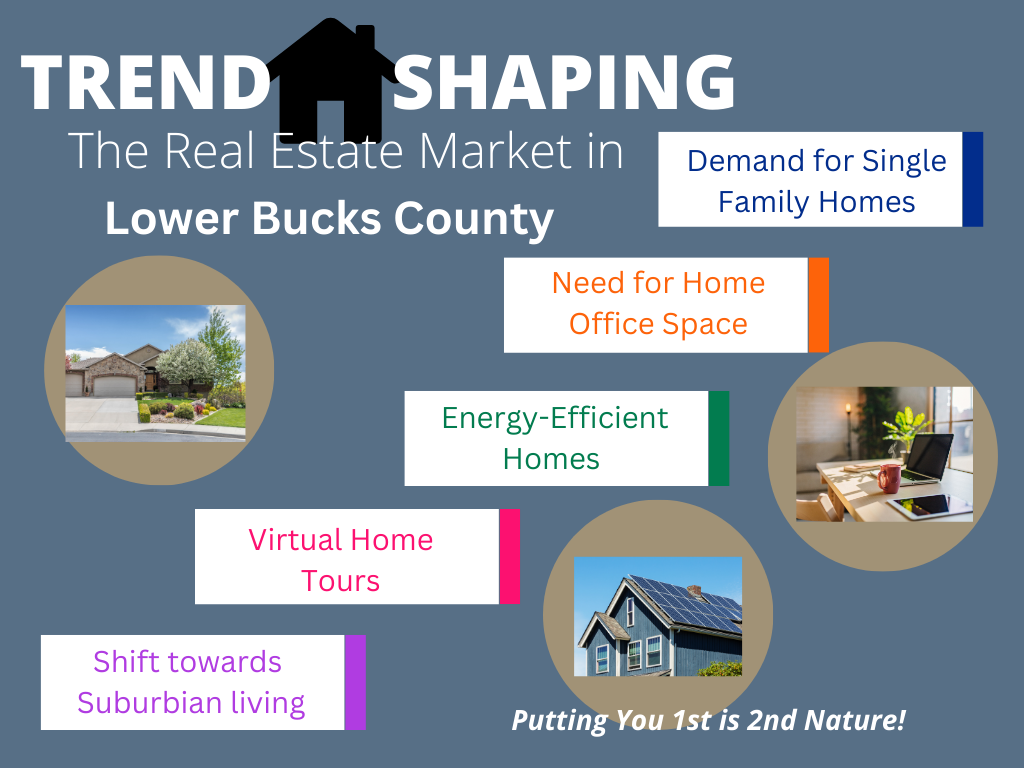
Five trends shaping the Lower Bucks County real estate market:
An Increased Demand for Single-Family Homes: As a result of the pandemic, many people are looking for more space and privacy. Leading to a surge in demand for single-family homes in Lower Bucks County. This has caused prices to rise, making it a seller’s market.
Emphasis on Home Office Spaces: More people working from home. There is an increased demand for homes that have a dedicated workspace or home office. Properties with home office spaces are becoming more popular and can command a premium price.
Interest in Sustainable and Energy-Efficient Homes: As people become more environmentally conscious,. There is a growing interest in homes that are sustainable and energy-efficient. Properties that have energy-efficient features such as solar panels or geothermal heating and cooling systems can be more attractive to buyers.
Rise of Virtual Home Tours: Since the pandemic, many buyers are opting for virtual home tours before in-person showings. This trend has continue even as the pandemic subsides. It provides a convenient way for buyers to view properties from the comfort of their own homes.
Shift Toward Suburban Living: There is a growing trend of people moving out of cities. Into suburban areas. Lower Bucks County, with its proximity to Philadelphia and its suburban feel, is a perfect option for those looking for more space and a quieter lifestyle. Leading to an increase in demand for homes in the area.

 Facebook
 X
X
 Pinterest
 Copy Link




 How to Choose the Right Mortgage as a Homebuyer